
Guess Who’s Back
January 13, 2012 § Leave a comment
 It’s been a while since the last time I blogged, but now I’m back with some new adventures to share!
For those of you who don’t know, I am currently (back) in Hong Kong doing a magazine internship until the end of May.
The first time I traveled to Hong Kong was almost exactly two years ago. This trip is markedly different. For one, I won’t be living the carefree life of a study abroad student; I’ll be working full-time and trying [and failing] to support myself. I won’t have the automatic support system of living in a dorm with other students from abroad, and, having been in this city before, I now know what to expect and hopefully will make fewer mistakes.
Lately, I had been thinking about how it feels to say goodbye. My ruminating led me to conclude that in terms of normal relationships (that is, not death or break-ups), bidding a temporary goodbye is (or can be) harder than a permanent one. When you say goodbye to a friend forever, you leave with what are usually positive memories ingrained in your minds, and you are both free to support each other from afar with the help of technology. There are very few expectations or responsibilities.
A temporary goodbye is quite different. There is the knowledge — often more of a hope — that you will see each other again. That hope is easily crushed should uncontrollable circumstances arise. There are no guarantees, only the substantial expectation that both parties will fulfill the promise to reunite. I suppose all this is to say that I’m going to miss B very much, and I look forward to coming home if only to see him again.
My flight to Hong Kong was my first time flying on Korean Air. It was also the first time in a long time that I’ve ridden an airplane with individual television screens; I think the last time was when my family was flying to either China or Argentina, and I tried watching Crouching Tiger, Hidden Dragon, but it bored me so I ended up watching Disney cartoons all night. (I was young! Stop judging me!) These days, in-flight entertainment systems are even touch-screen, which reveals nothing except that I must be a Luddite for finding it all so new and remarkable. Before take-off, one of the flight attendants walked around offering passengers the use of an iPad, which didn’t seem to rouse much interest. “Nobody wants an iPad?” she ventured. I love all these options!
Having flown United for the great majority of my life, I was interested in spotting the differences between the two airlines. For one, Korean Air offers those over-the-ear headphones that people used to use with their Walkmans; I haven’t seen one in forever, and I wondered how many travelers these days would actually neglect to bring their own listening apparatuses. Seeing someone use that style of earphone with a touch-screen device would be so hipster. Each seat also contained a flat package that contained a pair of slippers, earplugs and a toothbrush — how homey!

Korea Air: where old audio technology goes to die
In Which I Am Trying To Write A Statement of Purpose
November 21, 2011 § Leave a comment
There’s nothing like a tragedy to help me concentrate on getting work done. In this case, the work becomes the distraction from reality.
Is It Stealing If It’s Already Stolen?
October 30, 2011 § 7 Comments
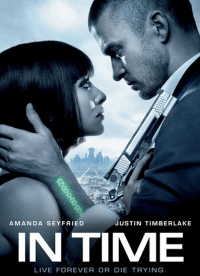
- You literally only have those 2 options.
Yes. The answer in most cases is yes. Yet, Amanda Seyfried‘s character felt convicted enough about that question to have the gall to ask it at two different points during the movie. Unless you’re a superhero with a catchphrase, that’s not acceptable. Then again, she and Justin Timberlake‘s character pretty much thought of themselves as Robin-Hood-esque vigilantes, so I don’t doubt that she would’ve uttered that line more than twice if given the chance.
In the movie In Time, we’re dropped in the middle of this post-industrialized society where people have one year to live after turning 25, and they use their time as currency, dropping dead when the clock on their arm reaches zero. Apparently this is an attempt to fight overpopulation, though I guess I missed that part of the exposition. There are so many questions I had about this society: How could the beauty/anti-aging and pharmaceutical companies let this happen?? Who runs the government, and how the hell did they implement this universal biological clock? Have hospitals become obsolete because people [ostensibly] tend to die of being robbed of time as opposed to ailments from which they can be resuscitated? Did minorities get eradicated early on in this anti-population process? We’re thrown in with little context, but with movies like this, we’re just supposed to accept what we’re told to be reality. Just like when you’re playing Pokémon, it’s better not to ask questions.
For full disclosure, the reason I wanted to watch this movie because one of my favorite actors, Matt Bomer, is in it. Yes, he dies rather early on in the film [it’s not a spoiler if it happened in the trailer!], but seeing him on the big screen was like a dream come true. I almost fainted with glee. His character philosophizes about life and death before “timing himself out ” [ie. suicide], which opens Timberlake’s eyes to the injustice around him.
In fact, there’s quite a bit of philosophizing in this movie. It comes out at an opportune time because the similarities to the Occupy Wall Street movement are easy to draw. The In Time society is separated into “time zones,” and only those rich with time are allowed out of the ghetto and into New Greenwich, which is one of those words [like Newfoundland] that should just be pronounced the way it’s spelled. Naturally, all the poor people in the ghetto rob each other and are themselves robbed by the powerful few, who control the markets and get to live forever. [They are the 1%!!!] It’s not hard to see the undertaking of a political message, but the film takes itself so seriously that the audience occasionally laughed when we weren’t supposed to. Oops.
Also, immortality seems like a throwback to villains of my childhood. Maybe it’s because I don’t watch cartoons anymore, but does anybody really want to live forever anymore?
 [SPOILER]
At some point during In Time, the movie jumps on the crazy train and derails itself. For example, Timberlake and Seyfried concoct the brilliant plan to rob a bank that magically leaves its vault open and uses no guards. They do this successfully multiple times. In fact, the only times they get caught are when they’re in the street and not brazenly stealing from a vault. They make a sexy Bonnie-and-Clyde-esque couple, but there’s very little substance to their relationship, so it ends up being cringe-inducing. [I wanted to die during the strip poker scene.]
And who else expected “fighting” to mean “intense arm-wrestling”??
[END SPOILER]
Some brief character comments:
Justin Timberlake: Is he just a good citizen for the hell of it? Why does he feel obligated to rescue Henry Hamilton? Why don’t we get to learn more about his father? The character development is lacking.
Best quote: “No one should be immortal if even one person has to die.”

- Watching. Waiting. Watching.
Amanda Seyfried: She spends most of the movie in 5 inch heels, an impressive feat considering the sheer amount of sprinting she has to do. Kudos! Her character is introduced to us as a super creeper who just stares at Timberlake wordlessly from a distance for quite some time. It reminded me of Olivia Wilde‘s character from Tron. She’s reckless without much reason, and the way she falls for Timberlake after being held for ransom by him is nothing short of desperate.
Worst quote: “You talk like someone who comes from the ghetto. Sometimes I envy them.” Spoken like a truly out-of-touch 1%!
Cillian Murphy: His wardrobe, according to LC, comes straight out of The Matrix. I have to agree. I guess it’s always a challenge to dress these futuristic societies, eh? Somehow, I don’t expect knee-length leather jackets to come back in style at any point in the future, but I guess I could be wrong.
Vincent Kartheiser: As Amanda Seyfried’s father, he served his role as the insecure time tycoon very well. Maybe it’s because the villains get better material to work with, but his acting was the best, in my opinion.
Alex Pettyfer: I can’t believe he’s actually younger than me. Are minutemen like gangsters? Where do they get so much power? Do they work for the rich?
In the end, I’m glad that we don’t have to live like this — literally living day to day, with death looming as palpably as the green neon numbers on our arms. Writer/director Andrew Niccol is behind classics such as the Truman Show and Gattaca, but In Time isn’t his strongest work. He highlights a very real problem, but his solution is a bit too extreme and simplistic.
A Miyazaki-Ghibli Sampler
October 24, 2011 § Leave a comment
 I’ve taken it upon myself to watch all of Hayao Miyazaki‘s feature films [and by extension, all Studio Ghibli films]. The first one I ever watched was Spirited Away (2001), in high school [or was it middle school], which introduced me to the magical world of Miyazaki’s animation. Some people began with My Neighbor Totoro, but I was a latecomer.
I had watched anime before, but it had never felt so…deep. [Arguably I had only watched questionable anime series that I don’t even remember anymore.] Next was Princess Mononoke (1997), which I barely remember but for the wolf and the forest and the lake. Then, when Howl’s Moving Castle was released in 2004, I watched that one online too. Miyazaki didn’t create another feature film until I was in college, so in 2008, I was delighted to watch Ponyo. It didn’t seem as well-received among my friends, who deemed it weird and childish, but I enjoyed it nevertheless. After that, I waited until this summer to watch The Secret World of Arrietty (2010), which was beautiful to watch even though the storyline didn’t really go anywhere.
Now, I’m going through the archives, digging for films that were released before I was even born. I’m normally apathetic about watching old movies [there’s barely enough time to watch all the new ones!], but I love animated films, and these are undoubtedly some of the world’s best. Besides, all the movies currently in theaters are mind-numbingly unappealing, so the choice was pretty easy. It doesn’t hurt that Miyazaki’s bio mentions a few times that he explores feminist themes by casting female characters as leads in his films. Could he be any more perfect and wonderful? Apart from that, some of Miyazaki’s expressed viewpoints remind me of Shel Silverstein, who also produced pieces for children in a deliberately non-condescending and non-patronizing way.
First on my list was Laputa: Castle In The Sky (1986). It came up in a Gchat conversation with VY, and I was all “what is this laputa, sounds like a spanish curse word” [those were my exact words], so I looked it up and decided to watch it. It’s weird to watch old-school animation that isn’t all slick like modern anime, but the hand-drawn style is one of Miyazaki’s many distinct charms, from the way food looks so freaking plump and delicious to the way a character’s facial expression and hair rises when he or she is alarmed.

FEED ME!!!!!!!
 auradis