
Are You Planning To Step On Us?
May 2, 2012 § Leave a comment
 What is it about watching a team come together that is so satisfying? It’s been done again and again in heist movies, secret agent movies, sports movies, Pokémon movies, and it never gets old. (Well, maybe the last one does.) The Avengers is Marvel Studios’ latest production of visual overstimulation, and I think Joss Whedon does a good job of giving the characters a balanced amount of screen time while keeping the film from toppling under the weight of superhero clichés.
As you should already know, Thor‘s jilted adopted brother Loki is leading an evil alien army to conquer Earth. The aliens, of course, are ugly creatures only one step above Power Rangers villains, and we get very little hint of their motive except that Earth is probably a more pleasant place to live than the dank, light-less planet from which they appear to come. I’m not saying that I wanted a half hour of heartfelt alien backstory, and fighting aliens is at least better than casting the Russians, Persians or Chinese as the enemy, but it almost seemed like another installment of the Transformers series.
And What Kind Of Freedom Is That?
February 14, 2012 § 2 Comments
 For Valentine’s Day, a couple of friends and I decided to go watch The Lady, a movie based on the life of Nobel Peace Prize recipient and Burmese democratic leader Aung San Suu Kyi, starring Michelle Yeoh and David Thewlis (AKA Professor Lupin). It wasn’t my first choice, honestly; while I didn’t doubt that it would be good, I figured a low-key film like that could be equally enjoyed on my laptop without paying for the $11US ticket. In the end, it turned out to be a highly appropriate choice for the holiday. If it were still out in US theaters, I would urge you to skip The Vow or Beauty and the Beast 3D or (heaven forbid) This Means War — if you want a story about the depths of true love, watch The Lady instead.
Some of you might not know who she is. I admit that despite having watched the documentary Burma VJ last year in my capstone class and having read about the country once in an Amy Tan novel, I still get Burma mixed up with Tibet sometimes. I mean, these small, oppressed Asian countries — who can keep track of them, right? Wrong. Irresponsible, even. Some of you [and by you I mean me] might only know her as the woman who was kept under house arrest for years, which sounds like the most boring way to lead a revolution if you ask me. (/sarcasm)
Some of you might even know that Burma is also sometimes referred to as Myanmar, and its naming appears to be quite confused though I like to think of the latter as its slave name. Anyway, my point is that most people in America (I can only speak for us, but the range is probably more like everywhere) know nothing about the country or its present-day politics, so do yourself a favor and get educated. It’s as easy as watching a movie (or two: Burma VJ could be considered a solid chronological epilogue to The Lady and the whole thing is on Youtube!!).
Social Media Barrage
January 30, 2012 § Leave a comment
On Friday, Al Jazeera posted a video newsclip about “South Korea’s Pop Wave.” I saw it tweeted from their Twitter account, which I follow, and clicked because it piqued my interest. Hmm, I thought. K-pop is ostensibly gaining exposure in America, and now Al Jazeera is reporting on it? Interesting. I got distracted by other things on Twitter before having a chance to get back to the video, but when I did, I realized that I didn’t feel like watching it anymore. As a [waning] K-pop fan, I don’t need some out-of-touch reporter telling me what to think of the industry. [Apparently I’m still afflicted with sentiments of a teenager at times.]
However, good old AJ just wouldn’t let it rest. Over the past few days, I have seen this story tweeted countless times from the one account — I’ve been following them for some time now, and I guess it just dawned on me that their approach to social media is to highlight stories over and over again like a desperate child with Tourette syndrome trying to be noticed, though it’s especially bad with this story. I mean, sometimes they even tweet the same story twice in a row for no apparent reason. What’s the point? What’s the strategy here? Who manages this account, a horde of robot monkeys?

Was it because the death count rose to more than “dozens”?
Al Jazeera tweets a lot, which not only oversaturates followers’ feeds but also trains followers to ignore the majority of them. I had never paid that much attention before because none of their articles quite caught my eye like the unexpected phrase “K-pop.” And you know what, maybe they’re onto something, for the more controversial of their K-pop tweets [AKA the ones that mention corruption or a “dark side”] get plenty of retweets. In any case, I decided to document Al Jazeera’s gauche behavior as a cautionary tale. I even replied to one of their tweets with a hesitant cease-and-desist, which did absolutely nothing. [Their account never replies to followers anyway.] If you would like to argue in their favor, I’d like to hear it!
These are in chronological order, from the first innocuous tweet to the most recent one, which I believe isn’t the last of them…
Is It Stealing If It’s Already Stolen?
October 30, 2011 § 7 Comments
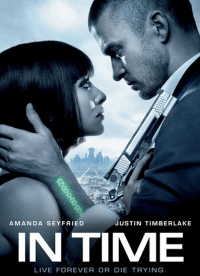
- You literally only have those 2 options.
Yes. The answer in most cases is yes. Yet, Amanda Seyfried‘s character felt convicted enough about that question to have the gall to ask it at two different points during the movie. Unless you’re a superhero with a catchphrase, that’s not acceptable. Then again, she and Justin Timberlake‘s character pretty much thought of themselves as Robin-Hood-esque vigilantes, so I don’t doubt that she would’ve uttered that line more than twice if given the chance.
In the movie In Time, we’re dropped in the middle of this post-industrialized society where people have one year to live after turning 25, and they use their time as currency, dropping dead when the clock on their arm reaches zero. Apparently this is an attempt to fight overpopulation, though I guess I missed that part of the exposition. There are so many questions I had about this society: How could the beauty/anti-aging and pharmaceutical companies let this happen?? Who runs the government, and how the hell did they implement this universal biological clock? Have hospitals become obsolete because people [ostensibly] tend to die of being robbed of time as opposed to ailments from which they can be resuscitated? Did minorities get eradicated early on in this anti-population process? We’re thrown in with little context, but with movies like this, we’re just supposed to accept what we’re told to be reality. Just like when you’re playing Pokémon, it’s better not to ask questions.
For full disclosure, the reason I wanted to watch this movie because one of my favorite actors, Matt Bomer, is in it. Yes, he dies rather early on in the film [it’s not a spoiler if it happened in the trailer!], but seeing him on the big screen was like a dream come true. I almost fainted with glee. His character philosophizes about life and death before “timing himself out ” [ie. suicide], which opens Timberlake’s eyes to the injustice around him.
In fact, there’s quite a bit of philosophizing in this movie. It comes out at an opportune time because the similarities to the Occupy Wall Street movement are easy to draw. The In Time society is separated into “time zones,” and only those rich with time are allowed out of the ghetto and into New Greenwich, which is one of those words [like Newfoundland] that should just be pronounced the way it’s spelled. Naturally, all the poor people in the ghetto rob each other and are themselves robbed by the powerful few, who control the markets and get to live forever. [They are the 1%!!!] It’s not hard to see the undertaking of a political message, but the film takes itself so seriously that the audience occasionally laughed when we weren’t supposed to. Oops.
Also, immortality seems like a throwback to villains of my childhood. Maybe it’s because I don’t watch cartoons anymore, but does anybody really want to live forever anymore?
 [SPOILER]
At some point during In Time, the movie jumps on the crazy train and derails itself. For example, Timberlake and Seyfried concoct the brilliant plan to rob a bank that magically leaves its vault open and uses no guards. They do this successfully multiple times. In fact, the only times they get caught are when they’re in the street and not brazenly stealing from a vault. They make a sexy Bonnie-and-Clyde-esque couple, but there’s very little substance to their relationship, so it ends up being cringe-inducing. [I wanted to die during the strip poker scene.]
And who else expected “fighting” to mean “intense arm-wrestling”??
[END SPOILER]
Some brief character comments:
Justin Timberlake: Is he just a good citizen for the hell of it? Why does he feel obligated to rescue Henry Hamilton? Why don’t we get to learn more about his father? The character development is lacking.
Best quote: “No one should be immortal if even one person has to die.”

- Watching. Waiting. Watching.
Amanda Seyfried: She spends most of the movie in 5 inch heels, an impressive feat considering the sheer amount of sprinting she has to do. Kudos! Her character is introduced to us as a super creeper who just stares at Timberlake wordlessly from a distance for quite some time. It reminded me of Olivia Wilde‘s character from Tron. She’s reckless without much reason, and the way she falls for Timberlake after being held for ransom by him is nothing short of desperate.
Worst quote: “You talk like someone who comes from the ghetto. Sometimes I envy them.” Spoken like a truly out-of-touch 1%!
Cillian Murphy: His wardrobe, according to LC, comes straight out of The Matrix. I have to agree. I guess it’s always a challenge to dress these futuristic societies, eh? Somehow, I don’t expect knee-length leather jackets to come back in style at any point in the future, but I guess I could be wrong.
Vincent Kartheiser: As Amanda Seyfried’s father, he served his role as the insecure time tycoon very well. Maybe it’s because the villains get better material to work with, but his acting was the best, in my opinion.
Alex Pettyfer: I can’t believe he’s actually younger than me. Are minutemen like gangsters? Where do they get so much power? Do they work for the rich?
In the end, I’m glad that we don’t have to live like this — literally living day to day, with death looming as palpably as the green neon numbers on our arms. Writer/director Andrew Niccol is behind classics such as the Truman Show and Gattaca, but In Time isn’t his strongest work. He highlights a very real problem, but his solution is a bit too extreme and simplistic.
 auradis